About IXS
Built to control more of the value chain
IXS Coatings was created around a straightforward strategic idea: leverage our strong polyurea high performance coating position and application experience in the automotive channel and take it across other demanding environments to replicate our success in automotive and displace existing coating technologies which lack the same durability and protection characteristics.
Four decades on from where it started, the group is built not only around its industry reputation but around proprietary chemistry, expert formulation, dedicated blending and packaging capability, the best in class field technical service, and long-term control of critical supply.
-
1986
Where it starts
Ground Effects — today GFX Solutions — was founded in 1986, building second-stage manufacturing capability for vehicle OEMs. Working alongside demanding automotive OEMs set the disciplines that still shape how the group operates: quality systems, supply chain discipline, scaled solutions at best cost as measured against rigorous OEM requirements.
-
2012
The formation of IXS Coatings
IXS Coatings was formed in 2012 through the combination of Ground Effects Ltd. and LINE-X. Ground Effects brought OEM integration and second-stage manufacturing; LINE-X brought a powerful aftermarket franchise network built around spray-on protective coatings and vehicle accessories cementing IXS as the leader in spray-on bedliner application.
-
2017
Owning the chemistry
The acquisition of Ultimate Linings in 2017 brought proprietary polyurea formulations, technical expertise and intellectual property into the group.
IXS was no longer dependent solely on application expertise, distribution and automotive integration. It now owned the specified automotive OEM chemistry, formulations and technical knowledge behind the protective coatings at the center of its businesses.
-
2019–2021
Disruption changed the strategy
Global supply disruption exposed a critical weakness. The COVID-19 pandemic put unprecedented pressure on logistics and raw material availability, and the severe Texas freeze further constrained supply of key chemical feedstocks.
At the time, IXS relied on third-party toll blending for a significant share of coating production. Even with strong demand across OEM, franchise and industrial channels, the group had limited control over production timing, volume and recovery speed.
The lesson was clear: control of chemistry was not enough without control of the blending and packaging operations.
-
2022
The move to vertical integration
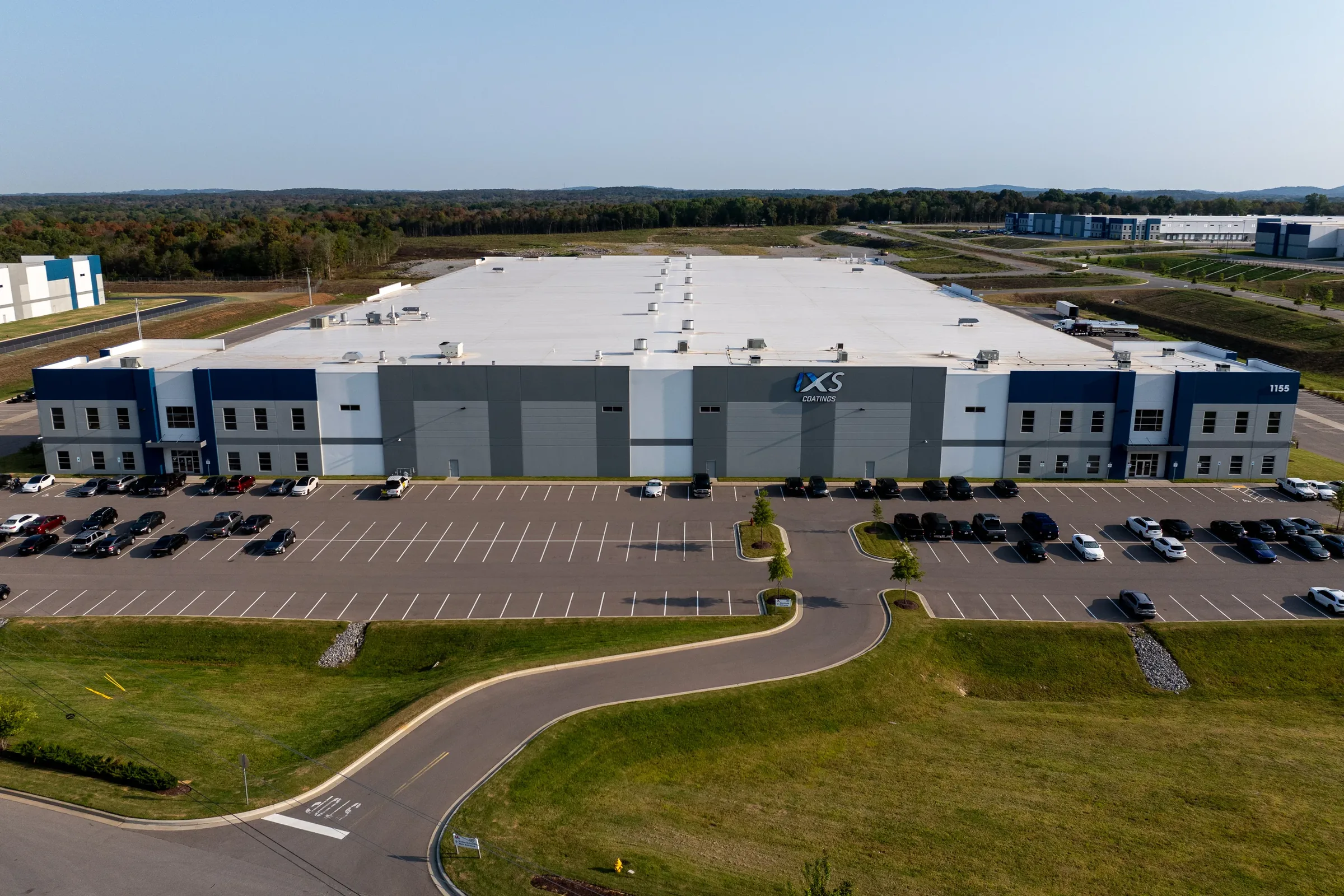
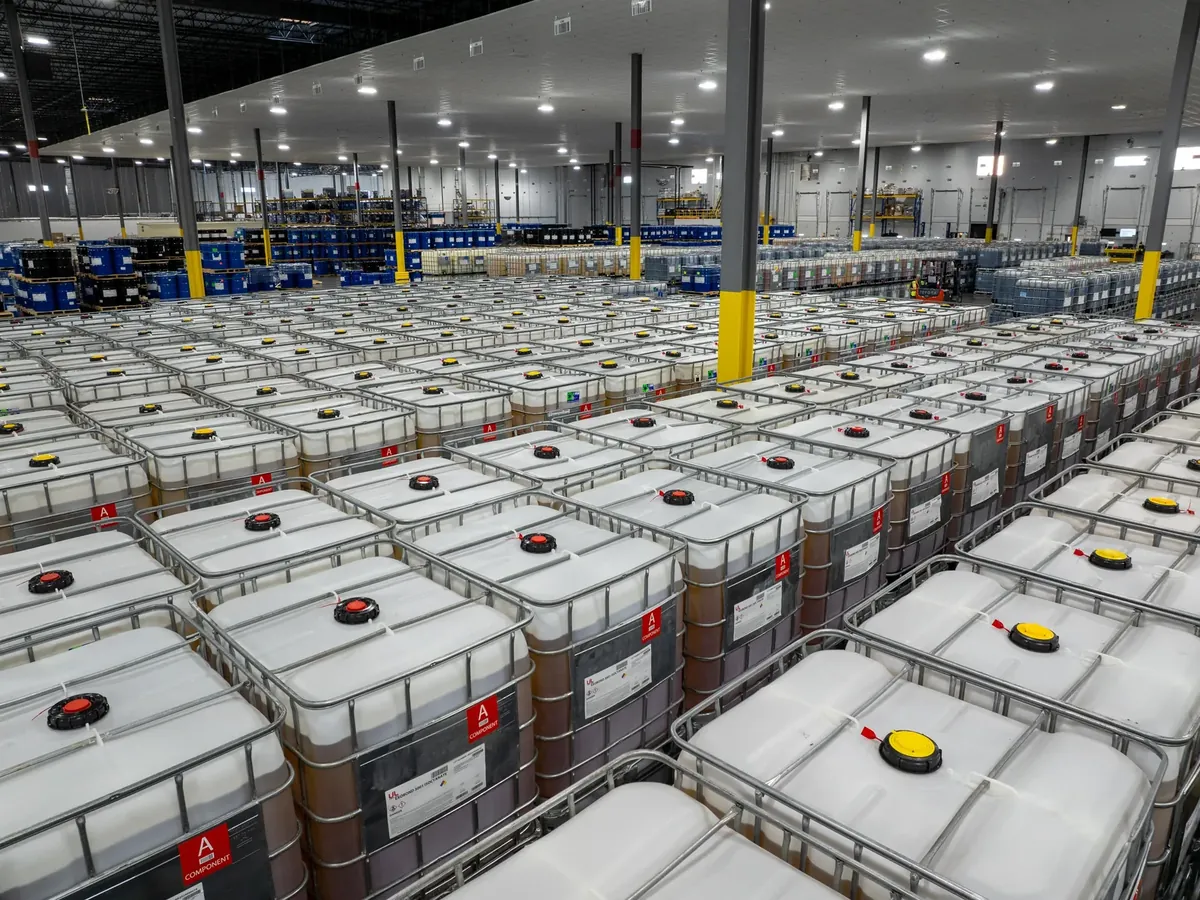
IXS purpose-built a major manufacturing operation in Lebanon, Tennessee, with Ultimate Linings becoming the group's coatings blending and packaging platform. The total economic investment approached $100 million, funded through group capital and external financing. Raw material storage, blending, packaging, warehousing, laboratory capability, supply chain management, strategic sourcing, and quality systems came together in purpose-built infrastructure.
The group now controls the coatings value chain end to end — proprietary formulations and technical development through raw material procurement, storage, blending, packaging and distribution.
-
2026
When the strategy was tested
Geopolitical disruption in the Middle East and an incident at a major Texas raw material facility again tightened polyurea supply. Where many suppliers struggled, Lebanon held its production schedule on the strength of supplier relationships, purchasing power, on-site storage, blending infrastructure and warehousing.
What had been the group's clearest vulnerability had become one of its strategic strengths.
-
2026
Sharpening the focus
On March 31, 2026, the group divested its traditional vehicle accessory manufacturing business in Windsor, Ontario, and Ground Effects was rebranded as GFX Solutions. What left the group was fabrication — metal forming, machining, e-coat, powder coat, injection molding and assembly. Spray on bedliner and vehicle upfitting remains a GFX Solutions core competency.
Both steps reflected the same decision. The group's advantage was coatings — proprietary chemistry, owned blending, accredited testing and the technical and robotic capability to apply it. Traditional accessory manufacturing sat outside that, competing on cost in a market where the group held no structural edge.
Divesting it concentrated capital and management attention on the coatings platform.
How the group operates
IXS Coatings provides a common corporate framework across the group through shared services and executive oversight. The operating businesses remain responsible for their own commercial activities, products, intellectual property and customer relationships.
Executive leadership
Group-level strategic direction and oversight.
Finance
Financial management, reporting and corporate planning.
Legal
The legal framework supporting group businesses and operations.
Information technology
Shared infrastructure, systems and support.
Compliance
Consistent corporate, regulatory and operational compliance.
Quality systems
The framework and oversight behind quality management and continuous improvement.
Leadership & governance
IXS Coatings sets the governance, compliance and quality frameworks within which its operating businesses work. The structure lets each company keep the agility and specialist focus of an independent business while working to consistent corporate standards.
Corporate responsibility
Long-term growth depends on responsible operations, strong governance and continued investment in the people, technologies and communities supporting the group. The group's approach covers environmental performance, workplace standards, responsible governance, compliance, and the development of technologies designed to protect and extend the service life of valuable assets.
Built for the next stage of growth
The investment in vertical integration was not made only to solve a supply problem — it created a platform: formulation and color development, dedicated blending and packaging capacity, accredited testing, field technical support and automated application capability.